
Physical therapy for athletes: Recovery and performance boost
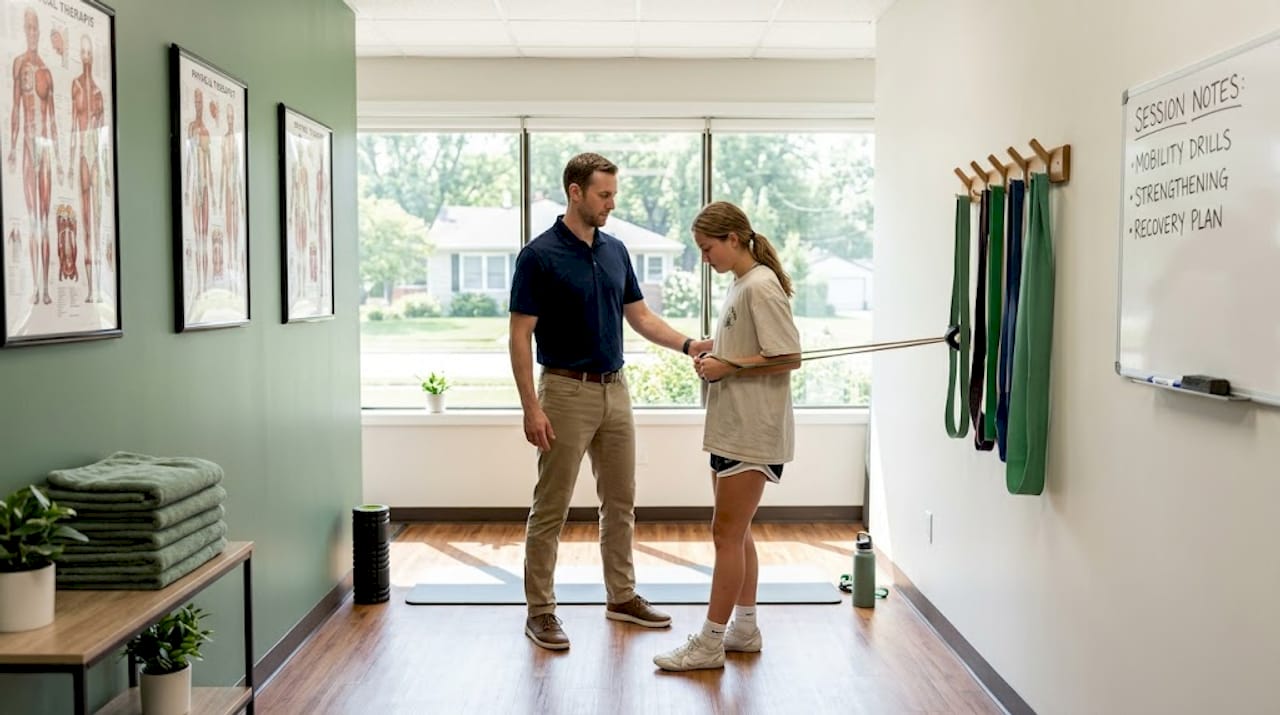
Getting injured as an athlete isn’t just physically painful. It disrupts your training schedule, threatens your season, and raises immediate questions about what comes next. For athletes in Queens and Nassau County, the path from injury to peak performance depends on far more than rest alone. You need specialized, objective-based physical therapy that matches your sport’s demands, supports your long-term goals, and works within your insurance coverage. This article walks you through the evidence-backed strategies, specific interventions, and practical insurance guidance that can make a real difference in how you recover and how you perform.
Table of Contents
Key Takeaways
Point | Details |
Criteria-based recovery | Using measurable progress benchmarks ensures safer and more effective athlete injury rehab. |
Exercise for performance | Structured, dynamic exercise interventions help boost performance and prevent sports injuries. |
Movement-pattern focus | Sport-like, multi-joint training in PT drives better athletic outcomes than static strength methods. |
Concussion management | Early, symptom-monitored aerobic activity enables safer, faster concussion recovery than strict rest. |
Insurance navigation | Clear benefit verification and prior authorization is crucial to maximize coverage for athlete physical therapy. |
Criterion-based return-to-play strategies
With the challenge introduced, let’s start with the fundamental principles guiding athlete recovery and safe return to play.
Not all rehab programs are created equal. Many traditional approaches rely on time alone: “rest for six weeks, then return.” But for athletes, time-based recovery often leads to premature return, re-injury, or prolonged underperformance. A smarter approach uses criterion-based progression, meaning you move forward only when your body meets specific, measurable benchmarks.
Criterion-based return-to-play approaches use measurable milestones rather than time alone, incorporating symptom and range of motion (ROM) standards to guide safe progression. This means your therapist looks at objective data before clearing you for the next training phase.
Here are some common benchmarks used in athlete rehab:
Ankle injuries: No swelling, full ROM in all planes, ability to perform single-leg balance for 10 seconds without pain, and successful hop tests
Knee injuries: Symmetrical quad strength (typically 90% limb symmetry index), absence of effusion (joint swelling), pain-free stair descent, and functional jogging without compensations
Shoulder injuries: Full pain-free ROM, rotator cuff strength within 10% of the unaffected side, and ability to complete sport-specific overhead tasks without guarding
The table below compares time-based versus criterion-based approaches:
Feature | Time-based rehab | Criterion-based rehab |
Progression trigger | Calendar weeks | Objective benchmarks |
Re-injury risk | Higher | Lower |
Sport specificity | Low | High |
Athlete accountability | Passive | Active |
Customization | Minimal | Individualized |
“Measurable milestones guide safe progression in sports injury rehab.”
This approach also helps with accelerating injury recovery because athletes stay motivated when they can see exactly what they’re working toward. Rather than waiting for a date on a calendar, you’re chasing a clear performance target. That distinction matters enormously for how engaged you stay during the harder middle weeks of rehab.
Pro Tip: At your first therapy session, ask your therapist directly: “What criteria do I need to meet before I can return to full practice?” If they can’t give you a clear answer, that’s a sign the program may not be performance-oriented.
A well-structured rehab path uses these criteria alongside hands-on treatment and progressive loading to build both confidence and capacity before you step back onto the field or court.
Top exercise-based interventions for athletes
Once milestones are set, the next step is identifying the most effective exercises and training methods for recovery and peak performance.
Research continues to support exercise as medicine for injured athletes. But not all exercise is equally effective. The most impactful interventions combine structure, sport relevance, and progressive overload.
Exercise-based interventions including structured neuromuscular warm-ups, eccentric training, controlled load management, and dynamic mobility are associated with improved sprinting, jumping, and balance performance alongside meaningful reductions in lower-extremity injuries. Here’s a breakdown of the top interventions that your therapist may use:
Neuromuscular warm-up programs: These are structured sequences performed before training or competition. They activate stabilizing muscles, improve joint sense (proprioception), and prime movement patterns. A common example involves lateral shuffles, high knees, and single-leg balance progressions done for 10 to 15 minutes before activity.
Eccentric loading: This means training a muscle as it lengthens under load. Single-leg eccentric squats (also called Nordic hamstring exercises for the hamstrings) are a well-researched tool for preventing ACL and hamstring injuries. They build strength through a longer range, which is where many sports injuries occur.
Controlled load management: Your therapist gradually increases training volume and intensity based on how your body responds. Rather than jumping back into full practice, you build load week by week, tracking soreness and recovery. This protects healing tissue while maintaining fitness.
Dynamic mobility drills: These are not static stretches. Dynamic mobility means moving through a joint’s full range actively, like leg swings, hip circles, or thoracic rotation drills. These prepare your body for the unpredictable demands of sport.
Sport-specific agility drills: Toward the end of rehab, your program should include sport-like tasks. For a basketball player, this might mean cutting drills or defensive slides. For a soccer player, it means reactive dribbling under light pressure.
Intervention | Performance benefit | Injury prevention evidence |
Neuromuscular warm-up | Improved balance and joint control | Strong: reduces ankle/knee injuries |
Eccentric loading | Greater strength at end-range | Strong: reduces hamstring/ACL risk |
Load management | Sustained training capacity | Moderate: limits overuse injuries |
Dynamic mobility | Improved joint range under load | Moderate: reduces muscle strains |
Agility drills | Faster reactive movement | Good: enhances neuromuscular timing |
These PT recovery tips apply whether you’re rehabbing an acute injury or proactively working to prevent one. If you’re continuing exercises between clinic visits, reviewing guidance on safe home exercises helps you maintain quality and avoid setbacks.
Pro Tip: Integrate a structured neuromuscular warm-up before every practice or game, even after you’ve completed rehab. Research shows this habit alone can reduce re-injury rates significantly over a season.
Movement-pattern training vs. traditional rehab approaches
With powerful interventions clarified, let’s explore how movement patterns shape athletic rehab and performance differently than traditional methods.
Traditional physical therapy often isolates individual muscles. Think seated leg extensions, straight-leg raises, or bicep curls in a fixed position. These tools have a place in early rehab when pain or swelling limits motion. But for athletes whose sports demand fast, multi-joint coordination, isolation-focused rehab can leave a significant performance gap.
Modern athlete-focused PT leans into movement-pattern training. This means training your body the way it actually moves in sport. Instead of a leg press, you work single-leg squats. Instead of a lat pulldown, you work pulling movements integrated with trunk rotation.

Movement-pattern and dynamic, multi-joint training yield different neuromechanical adaptations than isolated isometrics. This matters because the nervous system needs to rehearse the exact patterns it will use under game conditions. Rehab-to-performance programs emphasize sport-like dynamic tasks and timing rather than only strength in fixed positions.
Here’s how to evaluate whether your current program is truly performance-oriented:
It includes bilateral and single-leg tasks, not just two-legged exercises
It progresses to reactive drills, meaning you’re responding to cues rather than moving in preset patterns
It includes deceleration training, since most injuries happen when slowing down, not speeding up
It challenges your trunk under load, integrating core stability into every movement rather than isolating it separately
It simulates your sport’s timing demands, so a sprinter practices short explosive bursts while a tennis player trains multi-directional change of direction
“Dynamic, sport-like movement tasks drive neuromechanical gains for athletes.”
The expert therapy benefits of this approach are most visible in the later stages of rehab, when athletes often plateau with traditional programs but continue making gains with movement-based ones.
Concussion and edge-case management
In addition to musculoskeletal injuries, edge cases like concussion require a nuanced and evidence-based PT approach.
Concussion has historically been managed with strict rest and sensory isolation. No screens, no activity, no stimulation. While this approach has some logic in the first 24 to 48 hours, current evidence has moved decisively away from prolonged rest as the default recommendation.
The ACSM supports early, carefully dosed aerobic exercise with symptom monitoring and gradual progression rather than strict prolonged rest, with individualized symptom response as the guiding principle. Athletes who engage in supervised sub-threshold aerobic activity (meaning activity that doesn’t worsen symptoms) typically recover faster than those who remain sedentary.
Here’s a practical step-by-step progression for concussion management under PT guidance:
Baseline symptom check: Rate all symptoms (headache, dizziness, brain fog, sensitivity to light) on a 0 to 10 scale at rest. This is your starting point.
Light aerobic activity: Begin with stationary cycling or walking at a pace that keeps symptoms below a 2-point increase from baseline. Duration is usually 10 to 20 minutes.
Daily symptom monitoring: Track how symptoms respond during and after exercise. If they worsen significantly, reduce duration or intensity.
Progressive load increase: As symptom tolerance improves, increase duration and then intensity across consecutive days.
Add balance and coordination tasks: Introduce light vestibular (inner ear balance) and visual tracking exercises, which address the neurological aspects of concussion.
Sport-specific return: Gradually reintroduce non-contact sport-specific drills before full-contact clearance.
Athletes who follow this monitored progression can see recovery timelines shortened by meaningful margins compared to complete rest. The key is individualization. Two athletes with the same concussion may tolerate very different activity levels in week one.
Navigating physical therapy coverage and documentation
Finally, knowing how to access and pay for specialized physical therapy is critical for athletes and families. Here’s what to ask and expect.
Insurance coverage for physical therapy is rarely straightforward. Whether you’re on Medicare, Aetna, Cigna, Emblem, or United Healthcare, the rules around authorization, visit limits, and documentation can vary significantly. Understanding this ahead of time saves you from unexpected bills and frustrating delays.
PT coverage is plan-specific and often requires medical-necessity documentation. Athletes should ask the clinic for prior authorization confirmation, benefit verification, in-network status, visit limits, and whether additional coding or documentation is needed as therapy cost thresholds are approached under Medicare or per individual commercial insurer policy.
Here’s a step-by-step guide to navigating your coverage:
Confirm your plan type: Know whether you have Medicare (Part B covers outpatient PT) or a commercial plan (Aetna, Cigna, Emblem, United). Each has different rules.
Request benefit verification: Ask the clinic to run your insurance before your first visit. This tells you your co-pay, deductible, and estimated visit limits.
Ask about prior authorization: Some plans require approval before PT begins. Without it, claims may be denied even for covered services.
Confirm in-network status: An out-of-network clinic can cost significantly more. Verify that your chosen location is in your network.
Track your visit count: Many plans cap annual PT visits. Ask your therapist to prioritize the highest-value sessions if you’re approaching a limit.
Request documentation support: If your therapist needs to justify continued treatment (especially under Medicare’s medical necessity rules), make sure your clinic provides thorough progress documentation.
Essential questions to ask your clinic before starting:
“Do you accept my specific plan?”
“Will you handle prior authorization on my behalf?”
“How many visits does my plan typically cover per year?”
“Do you provide medical-necessity documentation for visit extensions?”
“Are there any out-of-pocket thresholds I should know about?”
Understanding insurance alternatives can also help if your current plan has gaps. Clinics serving Nassau County, including locations in Albertson, Herricks, Searingtown, and Williston Park, often have experienced staff who can walk you through these details before you commit to a plan.
Pro Tip: Never assume your insurance covers PT. Always get written benefit verification from the clinic before your first appointment. One phone call can save you hundreds of dollars.
Why conventional athlete rehab can fall short—and what really works
Having seen the practical strategies and coverage details, here’s our perspective on true athlete rehab excellence.
We’ve worked with many athletes across Queens and Nassau County, from high school soccer players to weekend runners to competitive tennis players in their 40s. One pattern shows up consistently: athletes who come to us after months of unsatisfying rehab elsewhere share a common frustration. They were told to rest, given generic exercises, and cleared based on calendar dates rather than actual readiness. They went back too soon, got hurt again, or never fully regained their pre-injury performance level.
Conventional PT often treats athletes as patients first and performers second. The goal becomes pain reduction rather than performance restoration. That is a meaningful difference. Pain-free doesn’t mean ready. An athlete who can walk without a limp is not the same as an athlete who can cut, decelerate, and explode off the line with confidence.
What actually works is a program that integrates objective return-to-play criteria, sport-specific loading, movement-pattern training, and real performance benchmarks from day one. Add to this the ability to navigate insurance smoothly so that athletes can access the full number of visits they need, not just the ones they think they can afford, and you have a genuinely complete rehab model.
“Athlete rehab isn’t just about healing. It’s building future performance.”
The athletes who recover fastest and most completely are those who engage actively in their own benchmarks, ask the right questions, and choose clinics that treat performance as the endpoint, not a bonus. If your current program doesn’t feel like it’s moving toward your sport, it probably isn’t.
Pro Tip: Choose clinics with a documented track record treating local athletes, not just general populations. Ask to speak with someone who has rehabbed athletes in your specific sport before committing to a program.
Where to find advanced athlete physical therapy services in Queens and Nassau
Putting these strategies into action starts with finding the right clinic. In Queens and Nassau County, you deserve access to physical therapy that is both evidence-based and insurance-savvy.
Our boutique PT clinic in Albertson, NY combines criterion-based athlete rehab, exercise-based performance interventions, and hands-on insurance navigation under one roof. We accept Medicare, Aetna, Cigna, Emblem, and United Healthcare, so you can focus on your recovery rather than paperwork. Browse our full range of clinic therapy options and treatment options to see what fits your needs. Athletes from across the region visit our Searingtown location and Albertson location for specialized care. Contact us today to verify your insurance and schedule your first evaluation.
Frequently asked questions
How do I know if my sports injury needs specialized physical therapy?
If symptoms linger beyond one to two weeks or if pain disrupts normal movement, a criterion-based PT evaluation using symptom and ROM standards can clarify your recovery needs and the safest progression plan.
Are exercise-based physical therapy methods more effective than traditional approaches?
Research strongly supports structured exercise-based interventions for improving sprinting, jumping, and balance performance while reducing lower-extremity injury risk compared to conventional static rehab alone.
What steps should I take to verify physical therapy insurance coverage?
Request benefit verification, prior authorization, and visit limit confirmation from your clinic before starting. Ask whether additional medical-necessity documentation is required for your specific plan.
Can concussion recovery include aerobic exercise?
Yes. Carefully dosed aerobic activity monitored for symptom response is now recommended by ACSM as part of concussion rehab, replacing the older model of strict prolonged rest for most athletes.
How does physical therapy differ between athletes and non-athletes?
Athlete PT integrates sport-like movement training and criterion-based progression to restore performance-level function, rather than simply achieving pain-free daily movement as the endpoint.
Recommended
Comments