
Practical 6 Week Spinal Stenosis Physical Therapy Backed by Research
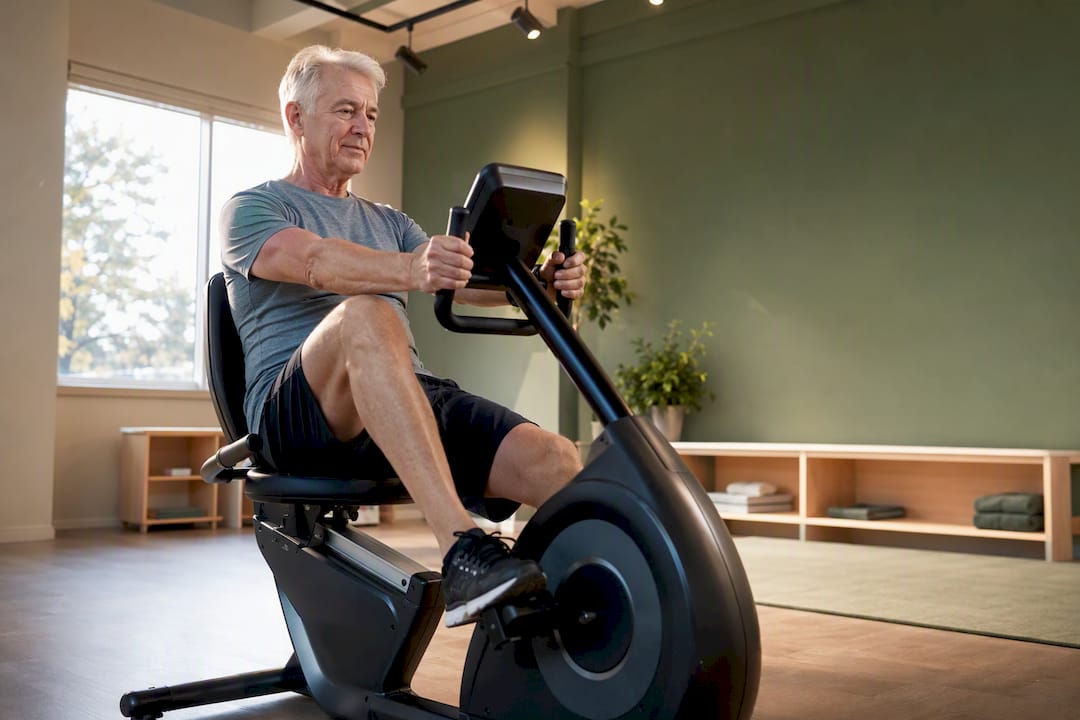
Physical therapy can meaningfully reduce pain and improve walking distance for many people with spinal stenosis, particularly when the program is supervised and built around flexion-biased movement, aerobic conditioning like cycling, targeted stretching, and core strengthening. Manual therapy often adds a short-term boost when combined with individualized exercise. That said, new numbness in the groin or saddle area, sudden loss of bladder or bowel control, or rapidly worsening leg weakness are red flags that need same-day medical attention, not a PT appointment.
TL;DR:
Supervised, flexion-biased aerobic exercises like recumbent cycling significantly improve symptoms and walking tolerance within two months.
Signs such as new numbness, bladder control loss, or rapid leg weakness require urgent medical evaluation before starting or continuing therapy.
Initial PT assessments include symptom mapping, gait testing, neurological checks, and positional trials to tailor individualized programs effectively.
Evidence supports combining manual therapy with active exercise for short-term symptom relief, but long-term benefits rely on sustained home adherence.
Activities involving lumbar extension, heavy loading, or impact should be avoided early in rehabilitation to prevent flare-ups.
Table of Contents
Who Benefits From Spinal Stenosis Physical Therapy, and When to See a Clinician First
What Happens During a Physical Therapy Evaluation for Spinal Stenosis?
Which Exercises for Spinal Stenosis Actually Show Up in the Research?
Building a Progressive Home and Clinic Program You Can Track
Movements and Symptoms to Avoid During Spinal Stenosis Rehab
What the Research Actually Shows About Spinal Stenosis Physical Therapy Outcomes
How to Choose a Physical Therapist and What to Ask at Your First Visit
How Contemporaryrehabservices Applies This Evidence-Based Model in Practice
Schedule a Spinal Stenosis Evaluation With Contemporaryrehabservices
Who Benefits From Spinal Stenosis Physical Therapy, and When to See a Clinician First
If your legs ache, tingle, or feel heavy after walking a few blocks but ease up when you sit or lean forward on a shopping cart, you’re describing a textbook symptom pattern called neurogenic claudication. It’s the calling card of lumbar spinal stenosis, and it responds differently to position than the vascular leg pain that shows up during walking regardless of posture. That distinction matters for how a therapist will build your program.
You’re generally a strong candidate for conservative spinal stenosis treatment if your symptoms are moderate, they fluctuate with position and activity, and you don’t have significant weakness or numbness. Physical therapy is considered a common first-line approach for exactly this profile, according to Mayo Clinic’s summary of nonsurgical options.
Some presentations call for a different starting point. Watch for these patterns:
Symptoms that respond well to conservative care: intermittent leg pain or tingling relieved by sitting or bending forward, gradual onset over months, and preserved strength in daily tasks.
Signs that warrant urgent evaluation before starting exercise: new or worsening numbness in the groin area, loss of bladder or bowel control, or fast-progressing weakness in one or both legs.
Borderline cases worth a same-week clinician visit: pain that’s stopped responding to rest or position changes, or a recent fall connected to leg weakness.
Realistic timelines matter here too. Most people who stick with a supervised program notice functional gains, like walking farther before symptoms kick in, within about a month or two. Physical therapy won’t shrink the spinal canal itself; what it does is improve how your body tolerates the space you have, according to guidance from the American Physical Therapy Association. That’s a meaningful goal, just not a structural fix.
What Happens During a Physical Therapy Evaluation for Spinal Stenosis?
Your first visit isn’t a quick once-over. A therapist experienced in spinal stenosis rehab will spend real time understanding your specific pattern before touching a single exercise.
Symptom history and mapping. You’ll describe when pain starts, what makes it worse (usually standing or walking upright) and what relieves it (usually sitting, or leaning on something like a grocery cart). This single conversation often does more to confirm neurogenic claudication than any imaging report.
Gait and walking tolerance testing. Many clinics use a timed walking test, sometimes on a treadmill, to establish your current baseline distance before symptoms force a stop. This number becomes your benchmark for tracking progress later.
Neurological screening. Your therapist checks strength, sensation, and reflexes in both legs to rule out anything requiring immediate referral and to document your starting point.
Range of motion and posture assessment. Expect a look at how far you can bend forward and back, and how your resting posture (particularly lumbar lordosis, the natural inward curve of your lower back) might be contributing to nerve compression.
Balance testing. Given how often stenosis affects proprioception and gait steadiness, a fall-risk screen is standard, even though balance work is underused in published exercise trials relative to its clinical importance, according to the systematic review of exercise interventions.
Positional trial. Your therapist will often test how you respond to flexed positions (like a seated slump) versus extended ones (like standing tall or arching back) to confirm the direction your program should favor.
The Choose PT clinical guide outlines this same evaluation structure as the professional standard, and it’s exactly this data, not a generic protocol, that shapes what your individualized program looks like. If you’re recovering from a related spine injury rather than degenerative stenosis alone, the evaluation process shares a lot in common with the approach used for broader spinal injury rehab.
Which Exercises for Spinal Stenosis Actually Show Up in the Research?
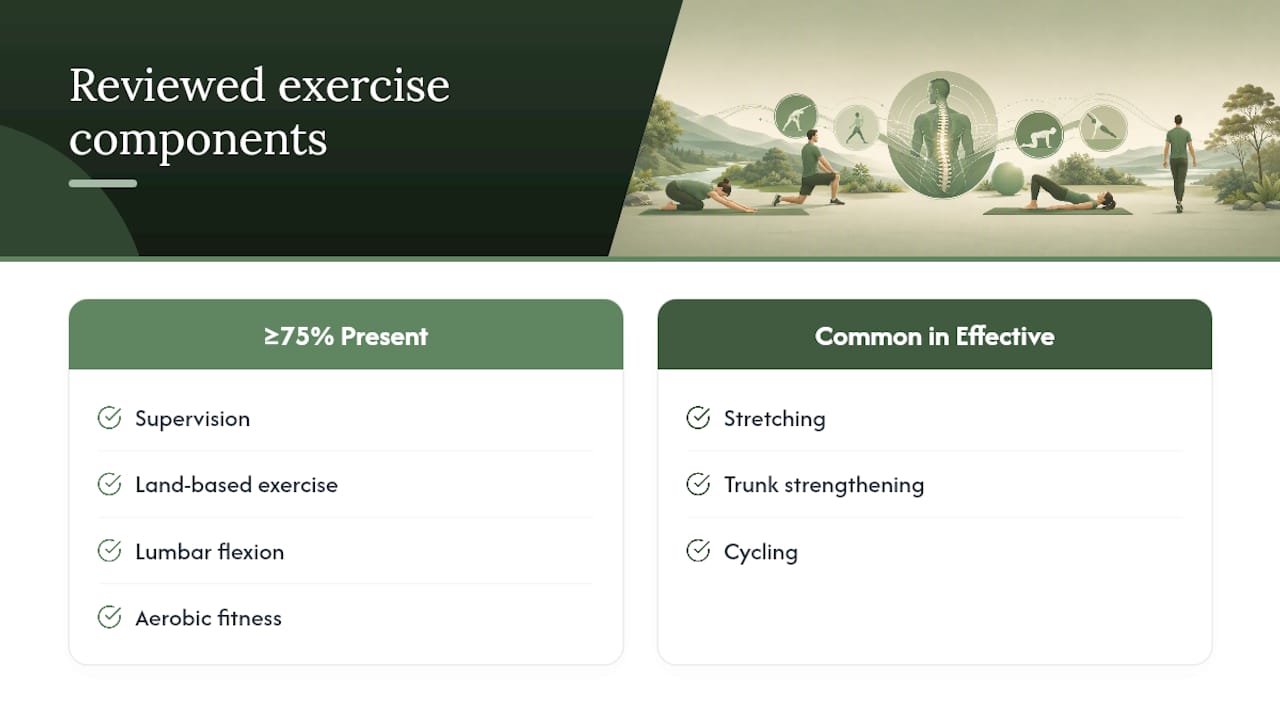
Not every exercise marketed for back pain belongs in a spinal stenosis program. A systematic review that broke down 23 separate exercise interventions found that supervision, land-based exercise, lumbar flexion, and aerobic fitness appeared in at least 75% of the interventions studied, and stretching, trunk strengthening, and cycling showed up more often specifically in the interventions that worked, according to the intervention component analysis. That’s a useful filter when you’re evaluating whether your own program lines up with what the evidence actually supports.
Flexion-based aerobic exercise
Cycling, especially on a recumbent or upright stationary bike, is one of the most consistently featured components in successful trials. The mechanism is straightforward: a forward-flexed, seated position opens up the spinal canal slightly and reduces nerve root compression, letting you build cardiovascular fitness without triggering the leg pain that upright walking often provokes. A typical progression starts with five to ten minutes at low resistance, building toward 20 to 30 minutes as tolerance improves. Stooped or slightly inclined treadmill walking works on the same principle for patients who prefer walking to cycling.
Strength and trunk stability work
Once aerobic tolerance is established, therapists typically layer in core and trunk exercises: pelvic tilts, modified curl-ups, and bridging progressions that build the muscular support around the spine without loading it in extension. These get dosed carefully. A patient with significant symptoms might start with isometric holds of five to ten seconds, while someone further along progresses to dynamic movements with light resistance.

Stretches and neural mobility
Hip flexor and hamstring stretching addresses the compensatory tightness that often develops when someone’s been guarding against pain for months. Some therapists also incorporate gentle neural mobility techniques, sometimes called nerve gliding, to improve how the nerve roots move through the narrowed spaces in the canal. If you’re searching for the best stretches for spinal stenosis specifically, know that the answer isn’t universal. What helps one patient may aggravate another, which is exactly why a supervised evaluation matters more than a generic stretching handout.
Balance and gait training
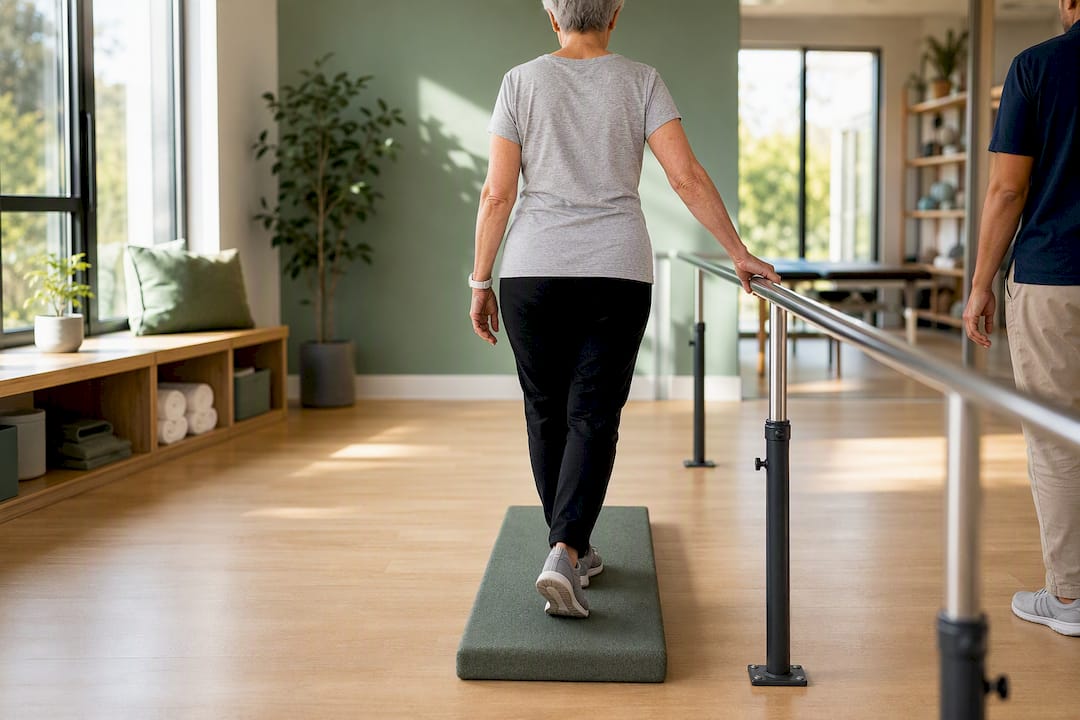
This component gets less attention in clinical trials than it deserves. The same intervention analysis noted that balance exercises were rarely included in the 23 programs studied, despite clear clinical value for a population with elevated fall risk. Practical balance work might include single-leg stance progressions, tandem walking, or use of an unstable surface like a foam pad under supervision. If gait instability or a recent fall is part of your picture, ask your therapist directly about balance-focused rehab strategies and consider reviewing outside resources like this balance training guide for older adults, which covers home safety adaptations that complement clinic work.
Manual therapy as part of the whole package
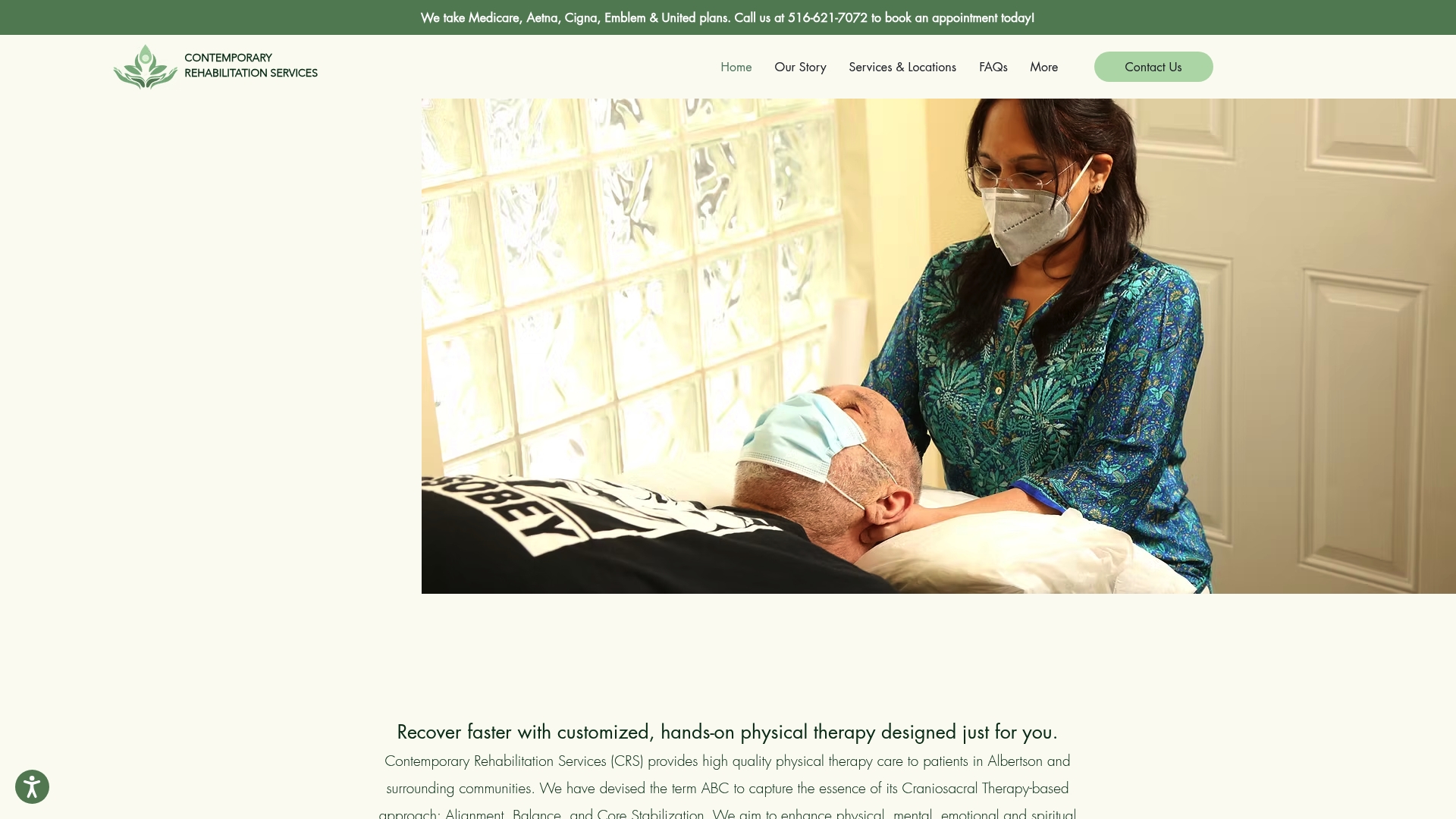
Hands-on techniques, including joint mobilization and soft tissue work, aren’t usually a standalone fix, but they show real value layered into a broader exercise program. A randomized trial comparing medical care, general exercise classes, and manual therapy paired with individualized exercise found the combined approach produced better symptom and walking scores at two months, according to comparative research on nonsurgical approaches. The benefit didn’t hold at six months on every measure, which is an important, honest caveat rather than a reason to skip manual therapy altogether. Learn more about how manual therapy supports mobility as one piece of a larger plan.
Supervised sessions consistently outperform unsupervised home programs alone in the trials reviewed.
Cycling and other flexion-biased aerobic work appear disproportionately in successful interventions.
Balance training is clinically important even though it’s underrepresented in published research.
Manual therapy adds short-term value when combined with, not substituted for, active exercise.
Pro Tip: If upright walking consistently triggers symptoms but cycling doesn’t, tell your therapist directly. That single piece of feedback often determines whether your program leans harder into stationary biking or a stooped treadmill protocol from week one.
Building a Progressive Home and Clinic Program You Can Track
A well-structured spinal stenosis rehab plan follows a predictable arc: build tolerance, add load gradually, and track objective numbers rather than relying on how you feel on any given day.
Weeks 1 to 2: Two clinic visits per week focused on establishing baseline walking tolerance, gentle flexion-based stretching, and low-resistance cycling (five to ten minutes). Home program: daily pelvic tilts and short cycling sessions if you have access to a bike.
Weeks 3 to 4: Clinic visits shift toward progressing core stability work and increasing cycling duration toward 15 to 20 minutes. Home program adds hip flexor stretching and a short daily walk, timed and logged.
Weeks 5 to 6: Sessions taper to once weekly with a heavier home component. Balance exercises get introduced if tolerance allows. Walking distance and cycling duration should show measurable gains over the six-week window compared to your week-one baseline.
Progression follows symptom response, not a fixed calendar. If an exercise provokes leg symptoms that don’t settle within a few minutes of rest, that’s your therapist’s cue to dial back intensity rather than push through. One practical clinical pattern worth knowing: patients often improve faster with lower-intensity, flexion-biased aerobic work and carefully dosed core exercises than with aggressive extension-based strengthening pushed too soon.
Adaptations for limited tolerance matter as much as the base plan. If standing cycling is too much, seated recumbent bikes reduce lumbar extension further. If walking distance is severely limited, body-weight-supported treadmill training lets you build tolerance without full load.
Tracking progress doesn’t require anything complicated. Log your walking distance before symptoms start (measured in blocks or minutes), rate pain on a simple zero-to-ten scale before and after sessions, and note cycling duration weekly. Bring this log to every appointment. Trials studying multimodal supervised programs that included education alongside exercise found more durable walking improvements over time, according to the updated systematic review, and consistent self-tracking is part of what makes that durability possible.
Movements and Symptoms to Avoid During Spinal Stenosis Rehab
Certain positions and activities reliably aggravate spinal stenosis symptoms because they extend or compress the already-narrowed spinal canal. Knowing what to limit early prevents the kind of flare-up that sets a whole program back by weeks.
Sustained lumbar extension, like prolonged standing with an arched back or extension-focused exercises common in general back-pain programs.
Heavy axial loading, including loaded overhead lifts or deep squats performed before your tolerance is established.
High-impact activities such as running or jumping sports, which combine impact loading with extension in ways that often provoke symptoms.
Long periods of standing without a position change, particularly in tasks like cooking or standing in line.
These aren’t permanent bans. They’re starting-point precautions your therapist will loosen as your tolerance builds, using pacing strategies, graded exposure to more demanding positions, and sometimes a temporary assistive device like a rolling walker with a seat, which naturally encourages a slight forward lean that many patients find relieving.
Certain symptoms fall into a different category entirely and require immediate medical evaluation, not a modified home program:
Numbness in the groin, inner thighs, or saddle area (saddle anesthesia).
New loss of bladder or bowel control.
Rapidly progressive weakness in one or both legs over hours or days rather than months.
If any of these appear, skip the physical therapy appointment and go to urgent care or the emergency department the same day.
What the Research Actually Shows About Spinal Stenosis Physical Therapy Outcomes
The evidence base for spinal stenosis physical therapy is stronger than many patients expect, though it comes with real limits worth understanding before you set expectations.
A comprehensive intervention component analysis reviewing 23 randomized controlled trials identified more than 60 distinct exercise components used across studies, with supervision, flexion-based movement, and aerobic fitness present in the large majority of programs tested, according to the systematic review. That heterogeneity is both a strength and a limitation: it confirms multiple approaches can work, but it also means no single “gold standard” protocol has been isolated and validated head-to-head against every alternative.
Randomized trial data adds nuance to the picture. One pragmatic trial found manual therapy combined with individualized exercise outperformed both general medical care and community exercise classes on symptom severity and walking distance scores at two months, though the advantage narrowed by six months, according to comparative trial findings. An updated systematic review reached a similar conclusion: moderate-quality evidence supports multimodal supervised programs combining manual therapy and exercise for short-term gains, with long-term durability varying by trial and by whether education was included alongside the physical components, per the updated review.
Here’s the practical read: expect solid short-to-medium term functional gains, better walking tolerance and reduced symptom severity, if you commit to a supervised, multimodal program for at least six to eight weeks. Expect that gains may plateau or need reinforcement after several months, which is normal and not a sign the program failed.
Short-term outcomes (measured at two to three months) show the most consistent improvement across trials.
Long-term outcomes (six months and beyond) are more variable and depend partly on continued home program adherence.
If symptoms are severe or rapidly progressive despite a genuine trial of conservative care, that’s the point for a shared conversation with your physician about surgical options, not a reason to abandon PT prematurely.
How to Choose a Physical Therapist and What to Ask at Your First Visit
Not every physical therapist has deep experience with spinal stenosis rehab specifically, and that experience matters more than a generic credential. Look for someone with orthopedic or spine-focused clinical experience, ideally with board certification as an Orthopedic Clinical Specialist (OCS) or completion of an orthopedic residency.
Before you commit to a plan, ask these questions directly:
How many sessions per week do you recommend, and for how long before we reassess?
What specific measure will we use to track progress, walking distance, a pain scale, a functional test?
What does my home program look like, and how much time per day should I expect to invest?
Does your clinic accept my insurance, and what happens if I need more visits than initially authorized?
Progress worth celebrating looks like measurable gains in walking tolerance or a documented pain-scale drop over four to six weeks. If you’re seeing no change after eight consistent weeks, that’s the signal to revisit your plan with your therapist or get a physician referral for further imaging or specialist evaluation.
How Contemporaryrehabservices Applies This Evidence-Based Model in Practice
Contemporaryrehabservices structures spinal stenosis care around the same supervised, multimodal model the research supports: individualized exercise progressions, manual therapy techniques like joint mobilization and myofascial work, and functional tracking from the first visit onward. guide each evaluation, and inform how programs get adjusted over time. reflect what that process looks like from the patient side.
The clinic accepts Medicare, Aetna, Cigna, Emblem, and United Healthcare, along with direct cash payment, and serves patients across Nassau County and Queens through both in-person and virtual sessions. If you’ve already started tracking your walking distance or pain scores using the approach outlined above, bring that log to your first appointment. It gives your therapist a real baseline instead of a guess.
Why Most Spinal Stenosis Advice Online Misses the Point
Most spinal stenosis content online treats exercise as one interchangeable category, as if any stretching routine or general strengthening plan will do. The research doesn’t support that. The trials that actually moved the needle on symptoms and walking distance had specific ingredients in common: supervision, flexion-biased positioning, and aerobic work like cycling, not a generic “core strengthening” handout downloaded off the internet.
The bigger gap in conventional advice is balance training. It’s clinically important for a population with elevated fall risk, yet it barely shows up in the clinical trials that shape most treatment guidelines. That’s a research blind spot, not a reason to skip it in your own program.
If there’s one thing to prioritize first, it’s finding a therapist who will actually test your response to flexed versus extended positions before building your plan, rather than handing you a standard back-pain worksheet. Spinal stenosis rehab that ignores that distinction is rehab built on a guess.
— CRS Wellness
Schedule a Spinal Stenosis Evaluation With Contemporaryrehabservices
Contemporaryrehabservices gives you direct access to supervised, one-on-one physical therapy without the long waitlists or rotating-provider model common at larger rehab chains. Sessions are available in person or virtually, and every plan starts with the kind of detailed evaluation described above, gait testing, neurological screening, and positional assessment, rather than a generic exercise sheet handed out on day one.
Booking is straightforward: bring a log of your symptoms if you’ve been tracking walking distance or pain levels, along with any recent imaging reports if you have them. Contemporaryrehabservices accepts Medicare, Aetna, Cigna, Emblem, and United Healthcare, plus direct payment for patients without in-network coverage. If you’re in Nassau County or Queens, you can view clinic details and request an appointment through the Albertson location page to get a visit on the calendar this week.
This article is general information, not a substitute for advice from a qualified doctor. Consult a qualified healthcare professional about your own circumstances before acting on anything here.
Sources
Recommended
Comments