
The Role of PT for Spinal Injuries: 2026 Guide
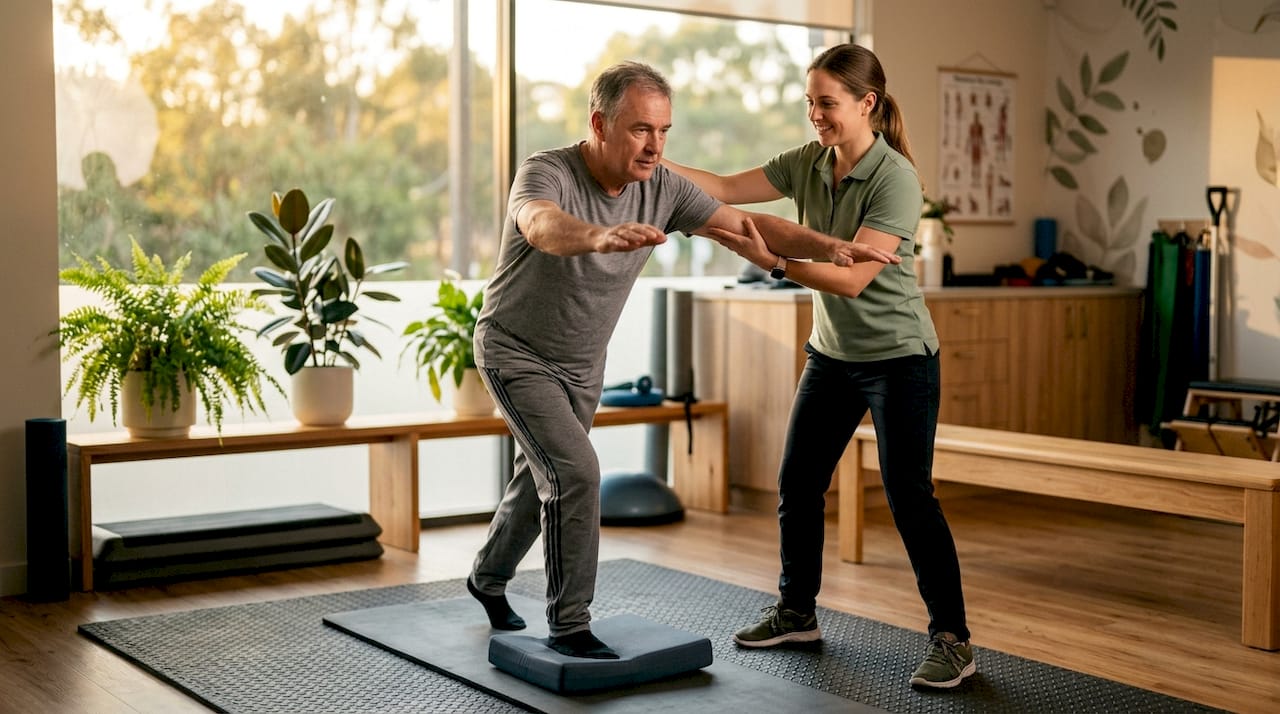
Physical therapy is the foundational rehabilitation approach that restores function, prevents complications, and improves quality of life for individuals with spinal injuries. Known clinically as physiotherapy or physical rehabilitation, the role of PT for spinal injuries spans everything from acute ICU care to long-term community reintegration. Physical therapists work within multidisciplinary teams led by physiatrists, applying evidence-based techniques aligned with standards like the ASIA motor score classification system. Rehabilitation begins as soon as medically stable and targets the prevention of secondary complications such as contractures and autonomic dysreflexia. The goal is not to reverse spinal cord damage, but to maximize what function remains.
What are the key physical therapy techniques for spinal injury recovery?
Physical therapy for spinal injuries divides into two broad categories: task-oriented training and conventional physiotherapy. Understanding the difference matters because the evidence strongly favors one approach over the other.
Task-oriented physiotherapy centers on repetitive, goal-directed movements that mimic real-life activities. Walking to a chair, shifting weight from foot to foot, or rising from a seated position are all examples. These movements are not random. Task-specific training promotes neuroplasticity, meaning the brain and spinal cord reorganize their neural pathways in response to repeated, purposeful practice. That reorganization is what drives functional recovery after injury.
Conventional physiotherapy includes passive stretching, range-of-motion exercises, and general strengthening. These methods have value, particularly in the early stages when a patient cannot yet participate actively. However, the clinical evidence is clear: task-oriented training produces significantly better outcomes. Adults with motor incomplete spinal cord injury who completed structured, task-oriented physiotherapy achieved nearly 3 times greater motor gains compared to those receiving conventional therapy alone. That translates to a mean ASIA motor score increase of 6.64 points versus 2.45 points, and a median two-level improvement on the Functional Ambulation Classification Scale.

Technique | Primary benefit | Best phase |
Task-oriented training | Neuroplasticity, functional mobility | Subacute and chronic |
Passive stretching | Prevents contractures, maintains range | Acute phase |
Strengthening exercises | Builds muscle capacity | All phases |
Gait training | Improves walking patterns and balance | Incomplete SCI |
In-bed cycling | Reduces spasms, maintains cardiovascular health | ICU and acute |
Pro Tip: Ask your physical therapist specifically about task-specific training. If your sessions consist mostly of passive stretching with little active movement, request a program that incorporates goal-directed exercises matched to your daily activities.
How does timing and intensity of therapy impact spinal injury outcomes?
Starting physical therapy early is one of the most consequential decisions in spinal injury recovery. The window for neuroplastic change is widest in the acute phase, and waiting too long can allow secondary complications to take hold.
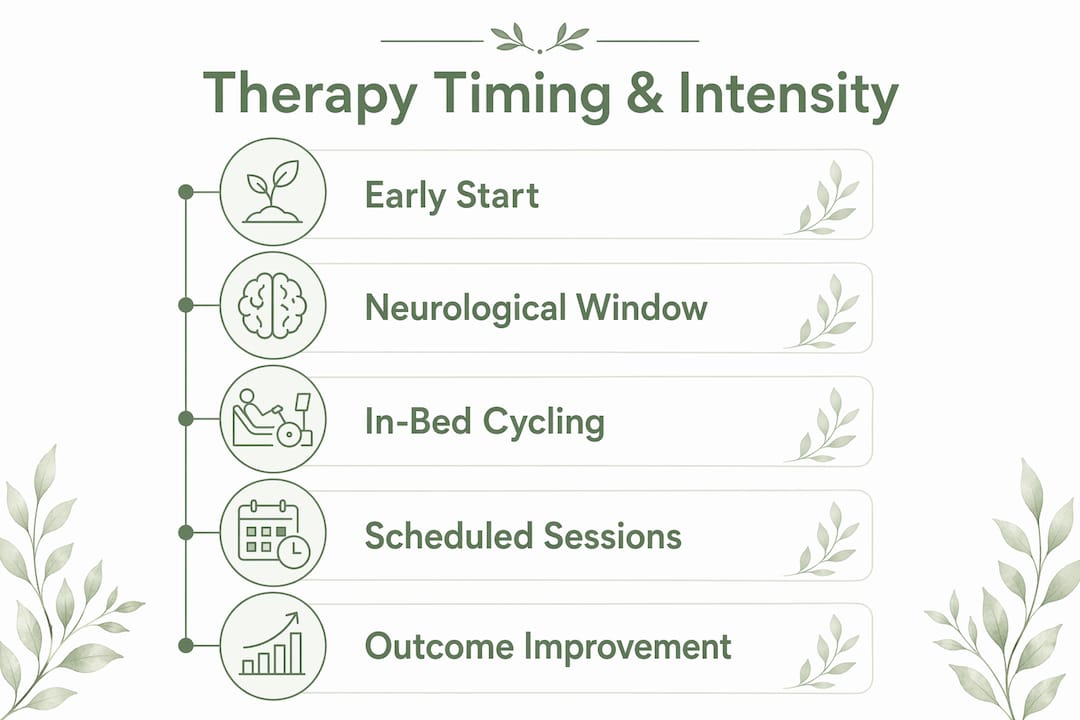
Clinical evidence from the PROMPT-SCI trial demonstrates this clearly. Early in-bed cycling within 48 hours of spinal surgery reduced spontaneous muscle spasms from 40% to 9% incidence. That same early intervention accelerated readiness for rehabilitation transfer by 7 days. Starting therapy in the ICU is no longer an experimental idea. It is a documented, effective strategy.
Intensity matters as much as timing. Patients typically receive a median of 8.3 combined therapy hours per week during early rehabilitation. That figure surprises many patients who expect a gentler pace. Standard inpatient programs dedicate roughly 70% of therapy time to active exercise, with about 3.8 hours per week directed at activity-based training. High-dose active therapy is the standard of care, not an optional upgrade.
Key principles for maximizing therapy outcomes:
Start early. Therapy initiated in the ICU or within the first 48 hours post-injury reduces spasms and speeds transfer to rehabilitation units.
Prioritize active exercise. Passive treatments have a role, but active, goal-directed movement should make up the majority of each session.
Maintain consistency. Long-term functional gains depend on sustained, regular therapy, not short bursts of intensive work followed by gaps.
Coordinate scheduling. Therapy sessions timed to align with periods of peak alertness and energy improve engagement and outcomes.
Track progress with objective measures. ASIA motor scores and Functional Ambulation Classification Scale ratings give you and your therapist clear benchmarks.
Pro Tip: If you are in an inpatient rehabilitation program, ask your care team to schedule your most demanding therapy sessions in the morning when energy and focus are highest. Neuroplasticity responds better to engaged, attentive practice.
What exercises improve mobility and independence after spinal injury?
Restoring mobility after a spinal injury requires a structured progression of exercises, each building on the last. The goal is functional independence, meaning the ability to perform daily tasks with as little assistance as possible.
Gait training is the most direct path to walking recovery for patients with motor incomplete spinal cord injury. It involves practicing walking patterns on a treadmill, on parallel bars, or over ground with therapist support. Balance exercises run alongside gait training, teaching the body to maintain stability during movement. Both approaches rely on repetition to reinforce the neural signals that control leg movement.
A practical progression for improving mobility looks like this:
Weight shifting. The patient learns to shift body weight from side to side while seated or standing. This builds the postural control needed for all movement.
Sit-to-stand practice. Rising from a chair is one of the most functionally important movements in daily life. Repeated practice strengthens hip extensors and improves balance simultaneously.
Stepping practice. Short, controlled steps on parallel bars or with a walker train the stepping pattern before progressing to open-ground walking.
Obstacle navigation. Once basic gait is established, practicing over uneven surfaces, curbs, and ramps prepares patients for real-world environments.
Assistive device training. Therapists teach patients to use walkers, canes, or orthotic braces correctly, reducing fall risk and building confidence.
Caregiver involvement strengthens every stage of this process. Therapists at Contemporaryrehabservices train family members and caregivers to support exercises safely at home, extending the benefits of clinic sessions into daily life. Patient education is equally critical. Understanding why each exercise matters increases adherence and helps patients advocate for themselves within their care team. For a broader look at physical therapy in rehabilitation, the connection between technique and recovery becomes even clearer.
How does physical therapy prevent secondary complications of spinal injuries?
Spinal cord damage does not only affect movement. It creates a cascade of secondary risks that physical therapy directly addresses. Managing these risks is as important as restoring function.
Muscle spasticity is one of the most common and disruptive complications. Early active therapy interrupts the cycle of spasm and disuse. The PROMPT-SCI trial showed that early cycling reduced spasm incidence from 40% to 9%, and simultaneously cut the co-occurrence of pneumonia, pressure injuries, and urinary tract infections from 13% to 2%. Those numbers represent a dramatic reduction in suffering and hospital time.
Key secondary complications that physical therapy prevents or reduces:
Pressure injuries. Regular repositioning and movement exercises reduce the time skin spends under sustained pressure, the primary cause of pressure sores.
Contractures. Passive stretching and range-of-motion exercises keep joints flexible when voluntary movement is limited.
Cardiovascular deconditioning. In-bed cycling and seated aerobic exercises maintain heart and lung function even in patients with limited mobility.
Respiratory complications. Breathing exercises and upright positioning reduce pneumonia risk, particularly in the acute phase.
Psychological decline. Structured therapy provides routine, measurable progress, and social interaction, all of which support mental health during a difficult recovery.
While spinal cord damage cannot be reversed, consistent physical therapy reduces its impact on daily life and supports social reintegration. Patients who engage actively in therapy programs report greater independence and productivity. The benefits extend well beyond the clinic. For patients in Nassau County and Queens, understanding PT for neurological conditions provides additional context for how these principles apply across injury types.
Key Takeaways
Physical therapy is the single most effective non-surgical intervention for improving function, preventing complications, and supporting independence after a spinal injury.
Point | Details |
Task-oriented training outperforms conventional therapy | Patients achieve nearly 3 times greater motor gains with goal-directed, repetitive exercise programs. |
Early intervention reduces complications | Starting therapy within 48 hours cuts spasm incidence and speeds transfer to rehabilitation by 7 days. |
High-dose therapy is the standard | Patients receive a median of 8.3 combined therapy hours per week during early rehabilitation. |
Secondary complication prevention is critical | Active therapy reduces pressure injuries, contractures, and respiratory complications alongside motor recovery. |
Caregiver involvement extends recovery | Training family members to support home exercises reinforces clinic-based gains between sessions. |
What I’ve learned about physical therapy and spinal injury recovery
After working with patients recovering from spinal injuries, the pattern I see most often is this: the patients who make the strongest gains are the ones who treat therapy as active work, not passive treatment. They show up to sessions ready to move, ask questions, and practice between appointments. The patients who struggle most are those waiting for therapy to “happen to them.”
The research backs this up. Task-oriented training produces measurably better outcomes than passive approaches, and the gap is not small. A mean motor score difference of more than 4 points is clinically significant. That difference comes from effort and repetition, not from any single technique or device.
The other thing I tell patients is to push for a multidisciplinary team. A physiatrist, a physical therapist, an occupational therapist, and a social worker working together produce better outcomes than any single provider working alone. If your current care feels siloed, advocate for coordination. You have every right to ask how your providers are communicating with each other.
Finally, do not underestimate the psychological side of recovery. Structured, goal-directed therapy gives patients something concrete to work toward. That sense of progress, even when it is measured in small increments, matters enormously for motivation and mental health. Spinal injury recovery is long. The patients who sustain effort over months and years are the ones who see the most meaningful change.
— Tj
Contemporaryrehabservices: specialized care for spinal injury recovery
Contemporaryrehabservices is a boutique physical therapy clinic in Albertson, NY, serving patients across Nassau County and Queens. The clinic specializes in evidence-based rehabilitation for spinal injuries, applying task-oriented training, gait rehabilitation, and complication prevention programs tailored to each patient’s injury level and goals.
The care team at Contemporaryrehabservices works within a multidisciplinary model, coordinating with physicians and specialists to deliver the high-intensity, active therapy that clinical evidence supports. The clinic accepts Medicare, Aetna, Cigna, Emblem, and United Healthcare plans. Explore the full range of spinal injury therapy options and schedule a consultation to build a personalized recovery plan.
FAQ
What is the main role of PT for spinal injuries?
Physical therapy restores motor function, prevents secondary complications, and supports independence by applying task-specific exercises and neuroplasticity-based training after spinal injury.
How soon should physical therapy start after a spinal injury?
Therapy should begin as soon as a patient is medically stable, with evidence supporting in-bed cycling within 48 hours of injury to reduce spasms and speed rehabilitation transfer.
What is the ASIA motor score and why does it matter?
The ASIA motor score measures muscle strength across key muscle groups to classify spinal cord injury severity. Physical therapists use it to track motor recovery progress over time.
How many hours of therapy do spinal injury patients typically receive?
Patients in early inpatient rehabilitation receive a median of 8.3 combined physical and occupational therapy hours per week, with active exercise making up approximately 70% of that time.
Can physical therapy help with incomplete spinal cord injury specifically?
Yes. Patients with motor incomplete spinal cord injury show the greatest response to task-oriented physiotherapy, achieving significantly higher functional ambulation gains than those receiving conventional therapy alone.
Recommended
Comments