
What Is Orthopedic Rehab? Your Guide to Recovery
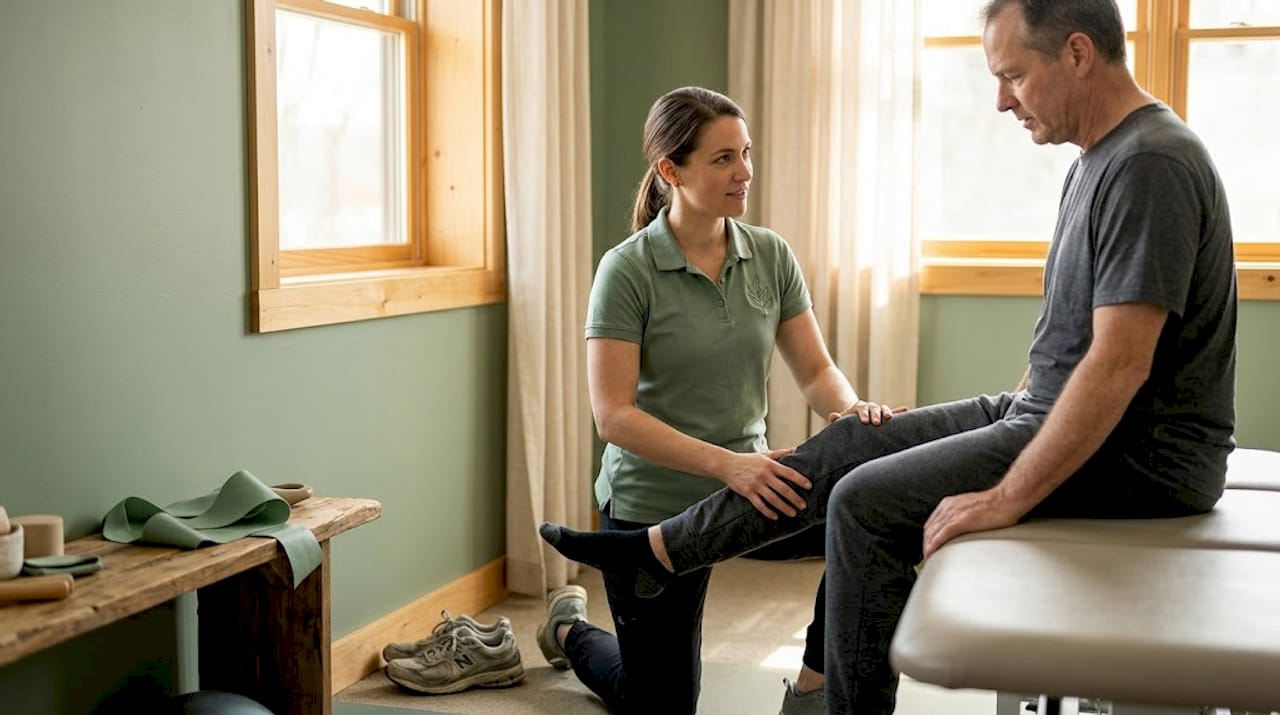
Orthopedic rehabilitation is not just a series of stretches and strength exercises you do after an injury. It is a carefully designed, evidence-based process built around your body’s natural healing timeline and your personal goals. Whether you are recovering from ACL surgery, a hip replacement, or a complex fracture, the path back to full function is more strategic and personalized than most people expect. Understanding how this process works, and why each step matters, can make the difference between a frustrating plateau and a confident return to everyday life.
Table of Contents
Key Takeaways
Point | Details |
Phased recovery process | Orthopedic rehab follows a strategic, step-by-step approach tailored to each stage of healing. |
Supervised therapy benefits | Guided rehabilitation improves physical outcomes more than home exercises alone. |
Progress tracking matters | Outcome measures and regular assessments are essential for safe, effective recovery. |
Personalization is key | Decisions between rehab and surgery depend on your goals and recovery response. |
Active patient role | Your communication and involvement drive true success in orthopedic rehabilitation. |
Understanding orthopedic rehabilitation: The basics
Orthopedic rehabilitation focuses specifically on restoring movement, strength, and function after injuries or surgeries involving bones, joints, muscles, tendons, and ligaments. It differs from general physical therapy in that it is tightly aligned with surgical timelines, tissue healing biology, and orthopedic-specific functional milestones. Your therapist is not just helping you feel better; they are guiding tissue repair in a deliberate sequence. The role of physical therapy in rehabilitation extends far beyond pain relief, reaching into restoring full confidence and capacity.
Who needs orthopedic rehab? The short answer is anyone who has experienced a significant musculoskeletal injury or undergone an orthopedic procedure. This includes people of all ages and activity levels, from weekend walkers in Nassau County to former athletes in Queens. The structured, phased rehab plan blends time-based healing with criteria-based progression, meaning you advance when your body is ready, not just when a calendar says so.
Here are some common orthopedic injuries and surgeries that typically require formal rehabilitation:
ACL, MCL, or PCL ligament tears
Rotator cuff tears and shoulder impingement
Total hip or total knee replacement
Meniscus repair or meniscectomy
Ankle fractures and ligament sprains
Spine surgeries including lumbar discectomy or fusion
Wrist and forearm fractures
Patellofemoral syndrome and tendon injuries
Each of these conditions affects different tissues and has a distinct healing curve. That is precisely why a single generic program cannot serve every patient. Your age, fitness baseline, overall health, and personal goals all shape what recovery looks like for you.
The phased approach: How structured plans guide recovery
Most orthopedic rehab programs follow a phased model, typically moving through protection, controlled motion, strengthening, and return to activity. This structure exists because healing tissue cannot be rushed safely. Ligaments and tendons, for example, take weeks to regain tensile strength, and loading them too early can set recovery back significantly. Choosing a rehab path early, ideally before surgery, can improve your outcomes and shorten your overall recovery time.
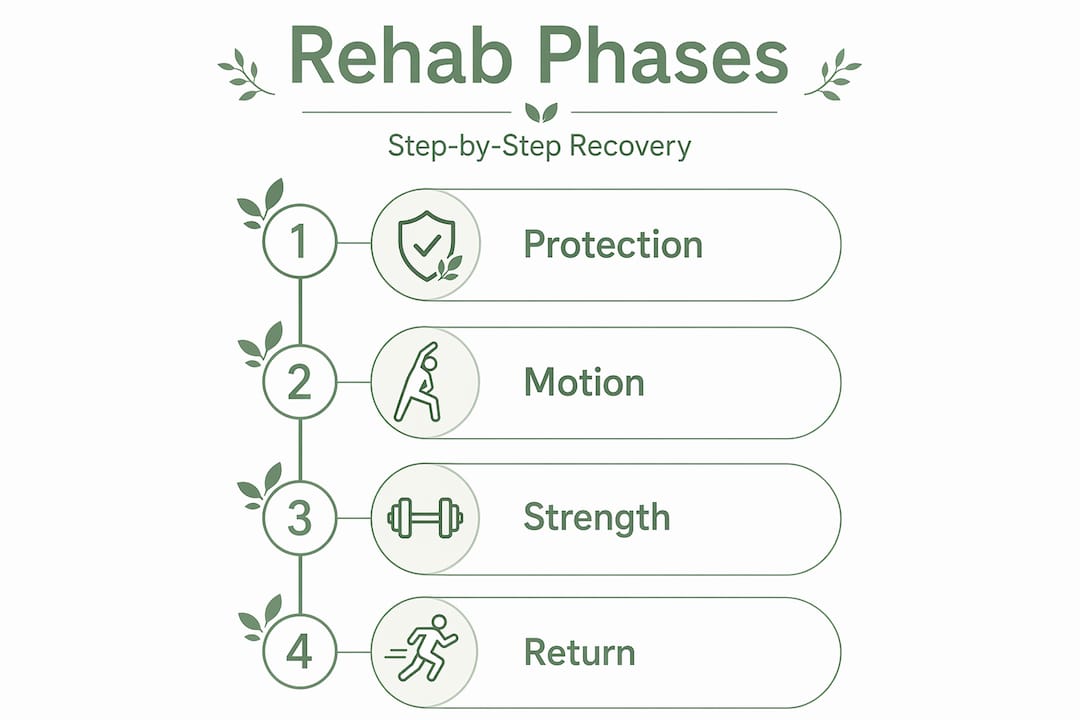
The table below outlines a typical phased framework for orthopedic rehab:
Phase | Goals | Criteria to advance | Example interventions |
Phase 1: Protection | Reduce swelling, protect healing tissue | Pain below 4/10, minimal swelling | Gentle range of motion, ice, compression |
Phase 2: Controlled motion | Restore joint mobility, begin light loading | Full or near-full range of motion | Stretching, water therapy, light resistance |
Phase 3: Strengthening | Build muscle strength and endurance | Adequate strength ratio, stable joint | Progressive resistance, balance training |
Phase 4: Return to activity | Sport or task-specific function | Functional test clearance | Agility drills, sport-specific movements |
For patients preparing for joint replacement, prehabilitation strategies before surgery can strengthen the surrounding muscles and reduce postoperative complications. Research from the Cleveland Clinic supports using prehab to improve outcomes after total joint replacement, especially for older adults or those with lower baseline fitness.
Here is how a real patient might move through these phases after ACL reconstruction:
Weeks 1 to 2: Focus on swelling control, regaining the ability to fully straighten the knee, and gentle quad activation.
Weeks 3 to 6: Begin stationary cycling and closed-chain exercises like mini squats to build early strength without stressing the graft.
Weeks 7 to 12: Progress to single-leg strength work, balance activities, and light jogging once criteria are met.
Months 4 to 9: Introduce sport-specific drills, agility work, and psychological readiness training before return to play.
Pro Tip: At every appointment, ask your therapist what phase you are in and what specific criteria need to be met before moving forward. This keeps you informed, motivated, and prevents unsafe progression. Starting physical therapy with a clear understanding of your roadmap sets the right tone from the very beginning.
One thing that makes orthopedic rehab especially valuable is that it does not just follow a clock. Expert physical therapy teams use measurable standards at each phase transition, making the process far safer and more precise than a simple “do this for six weeks” approach.
Evidence-based rehab: Why supervision and tailored exercise matter
Structure alone does not guarantee results. Research consistently shows that the way rehab is delivered makes a measurable difference in patient outcomes. Supervised rehabilitation, where a licensed therapist guides and adjusts your exercises in real time, produces better results than minimal care or unsupervised home programs alone.
A systematic review examining supervised rehabilitation outcomes after lumbar surgery found that patients who received structured, supervised exercise programs demonstrated significantly higher physical activity levels compared to those given basic advice only. The review highlighted that behavioral components, including direct activity guidance and education, were key drivers of those improved results.
Here is what an effective, evidence-based orthopedic rehab plan typically includes:
A formal intake evaluation using validated outcome measures
Clear short-term and long-term functional goals set collaboratively
Supervised exercise sessions with progressive overload principles
Manual therapy when appropriate (joint mobilization, soft tissue work)
Patient education on healing, activity modification, and pain science
Home exercise programs that reinforce in-clinic gains
Regular reassessment and plan adjustment based on your progress
Behavioral coaching to support motivation and healthy movement habits
The education component deserves special attention. Many patients in Queens and Nassau County arrive at rehab not knowing what their surgery actually did or why certain movements are restricted. When therapists take time to explain the “why,” patients tend to comply better with their programs, move more confidently, and report less pain-related fear. This knowledge also helps you do exercises safely at home between clinic sessions, reinforcing the work done under supervision.
Tailored exercise also addresses co-existing problems that a generic program misses. If you had a knee replacement but also have mild hip weakness, a personalized program addresses both. If you are recovering from a rotator cuff repair but have a stiff thoracic spine, your therapist can target that too. This is the advantage of individualized assessment over a printed handout.
Measuring progress and overcoming challenges in orthopedic rehab
Recovery is rarely a straight line. Most patients will face at least one obstacle, whether that is a flare-up of pain, a life event that disrupts attendance, or a moment of discouragement when progress feels slow. Knowing how therapists track your progress and understanding your own milestones helps you stay on course.
Therapists use two main types of outcome measures. Performance-based tests involve objective physical tasks, like a timed single-leg squat, a step test, or a limb symmetry test comparing the injured side to the healthy side. Patient-reported outcome measures (PROMs) capture how you feel about your function and pain in daily life. Both matter. A patient can score well on a strength test but still report significant fear of reinjury, and that psychological barrier is just as real as any physical limitation.
“Standardized outcome measures are widely used in orthopedic physical therapy, yet consistency in which tools are used and how results guide clinical decision-making remains an ongoing challenge across the profession.”
Here are some common barriers patients face and what you can do about them:
Pain flare-ups: Often normal, but should be communicated promptly so your therapist can adjust load
Fear of reinjury: Very common after ACL or fracture recovery; your therapist can help with graded exposure
Work and family schedule pressures: Talk to your clinic about flexible scheduling or telehealth check-ins
Fatigue or low motivation: Short-term goal-setting and regular progress reviews can reignite momentum
Swelling or stiffness that seems stuck: May signal a need for manual therapy or activity modification
Pain and performance during rehab are closely linked. High or persistent pain can reduce your ability to load tissues effectively, which slows strength gains and delays your return to activity. This does not mean pain is always a signal to stop. It means your therapist needs accurate information to calibrate your plan correctly.
Pro Tip: Never downplay pain to seem like a “good patient.” Telling your therapist exactly where, when, and how pain occurs gives them the data they need to keep you progressing safely. Your recovery and wellness depend on honest, ongoing communication.

Tracking progress also fuels motivation. Seeing measurable improvements, like walking farther without pain or achieving a new personal best on a strength test, reinforces your effort and keeps you engaged. Your therapist’s job is partly to serve as your data interpreter, helping you understand what the numbers mean and what comes next. For a deeper look at how structured programs make a difference, explore your rehab pathway details and see how accelerating recovery with PT is a realistic, science-supported goal.
Personalized decisions: Rehab first, surgery, or both?
One of the most important conversations you can have with your care team is whether to pursue rehabilitation before considering surgery, or whether surgical intervention is the right first step. This decision is not always straightforward.
Factor | Rehab-first pathway | Early surgery pathway |
Best for | Partial tears, stable injuries, older/less active patients | Complete tears, instability, high-demand athletes |
Key benefit | Avoids surgical risks, may achieve full recovery | Faster return to high-level activity, structural repair |
Main drawback | May need surgery later if rehab fails | Recovery from both surgery and rehab required |
Timeline | 6 to 12 weeks before re-evaluation | Surgery plus 6 to 12 months of rehab |
Patient input needed | Activity goals, risk tolerance | Urgency, surgical candidacy |
ACL injuries are the most studied example of this decision point. Research comparing rehab versus surgery for acute ACL injury shows that long-term outcomes for function and quality of life are more similar than many patients expect. Some individuals do very well with structured rehab alone, especially if they are not returning to cutting and pivoting sports. Others develop persistent instability that makes surgical reconstruction necessary.
Factors that typically influence the decision include:
Age and overall health
Activity level and sport or occupation demands
Degree of instability in the injured joint
Presence of additional injuries (meniscus tear, bone bruise)
Personal goals and timeline
Patient preference after informed discussion
Shared decision-making, where you and your clinician review the evidence together and weigh your personal values, is the gold standard. No one should feel pressured into a surgical path without understanding the alternatives, and no one should delay necessary surgery out of fear. If you are managing knee pain and want to understand your options, learning about treating knee pain is a great starting point.
The real secret behind successful orthopedic rehab
Here is something we rarely say out loud: the most scientifically designed rehab protocol in the world will underperform if the patient is not truly engaged. We have seen patients in Nassau County and Queens follow every protocol exactly on paper but stall in their recovery because they never asked a question, never pushed back when something felt off, and never understood why they were doing what they were doing.
Active participation is not a bonus feature. It is the foundation. When you understand your phase, your goals, and your barriers, you become a collaborator in your own care rather than a passive recipient. That shift changes everything. Patients who ask questions, report symptoms accurately, and communicate life challenges to their therapist consistently achieve better outcomes than those who quietly comply.
The “patient-centered care” phrase gets used often, but what it actually looks like in a boutique clinic serving Queens and Nassau County is a therapist who knows your job, your family demands, your fear of falling, and your goal of walking your daughter down the aisle without a cane. That context shapes every decision. Generic protocols cannot account for your life. Personalized plans, built on ongoing dialogue, absolutely can.
We also want to say something about the timeline. Many patients arrive with unrealistic expectations driven by what they read online or what a friend experienced. Recovery is not linear. It is not always fast. But every step forward, however small, is real progress. Invest in your process, communicate openly with your team, and trust the structure. The evidence supports it. Local recovery experiences consistently show that the patients who do best are the ones who showed up, spoke up, and stayed curious.
Find your path to recovery with expert orthopedic rehab in NY
Understanding how orthopedic rehab works is the first step. Taking action is the next one. At our boutique physical therapy clinic in Albertson, we specialize in personalized, phased rehabilitation for residents across Queens and Nassau County. Whether you are recovering from a recent injury, preparing for surgery, or navigating a long road back from a joint replacement, our team builds a plan around your goals, your timeline, and your real life.
We accept Medicare, Aetna, Cigna, Emblem, and United Healthcare plans, making expert care accessible without the financial stress. Explore our full range of therapy options to find the right fit for where you are in recovery. Ready to take the next step? Visit our clinic website to request an evaluation or ask us any questions. You deserve a recovery plan that actually fits your life.
Frequently asked questions
How long does orthopedic rehab usually take?
Most orthopedic rehab plans last from several weeks to several months, depending on the injury and individual progress, since programs follow a criteria-based progression rather than a fixed schedule.
What’s the difference between home exercises and supervised physical therapy?
Supervised therapy provides expert guidance, hands-on adjustments, and real-time feedback, while home exercises reinforce gains but may miss nuances that supervised rehabilitation can catch and correct.
Can pain during rehab slow my recovery?
Yes, because pain tolerance during loading directly affects your ability to build strength, so always tell your therapist when and where pain occurs so they can adjust your program.
When might surgery be recommended instead of rehab?
Surgery is often considered when rehab does not restore stability or function, or when the injury severity and lifestyle demands make it the most practical path, as rehab vs. surgery outcomes depend heavily on individual factors.
How are my progress and milestones measured during rehab?
Therapists use standardized outcome measures such as strength tests, functional movement assessments, and patient-reported scales to track recovery and guide clinical decisions at each stage.
Recommended
Comments