
Your Rehabilitation Checklist for Injury Recovery in 2026

A rehabilitation checklist is a structured, step-by-step recovery guide that helps individuals recovering from injury or surgery manage every phase of healing and track measurable progress. Clinicians formally call this process discharge planning and post-acute care coordination, but for you as a patient, it comes down to one practical tool: a clear list of what to do, when to do it, and who is responsible. Standards from the Centers for Medicare and Medicaid Services (CMS) and instruments like the IRF-PAI (Inpatient Rehabilitation Facility Patient Assessment Instrument) define what quality recovery looks like. Contemporaryrehabservices, a boutique physical therapy clinic serving Nassau County and Queens, NY, uses these same standards to guide patients from facility to home safely.
1. What are the critical components of a rehabilitation checklist?
A complete rehab checklist covers eight distinct categories. Each one targets a specific risk point in your recovery, and skipping any one of them raises your chance of complications or hospital readmission.
A safe discharge from a rehabilitation facility requires a six-part plan covering clinical handoff, medication reconciliation, equipment setup, home safety, health follow-up, and emergency planning. That process should start three to five days before you leave the facility, not on discharge day itself.

Here is how each category breaks down:
1. Pre-discharge preparation. Confirm that all clinical documentation is complete, that your therapy goals have been reviewed with your care team, and that your caregiver understands their role. Ask your therapist to walk through your discharge summary with you before you sign anything.
2. Home environment readiness. Remove trip hazards, install grab bars in the bathroom, and confirm that your bedroom is accessible without climbing stairs if mobility is limited. A physical therapist can conduct a home safety screen before you leave the facility.
3. Medication management. Reconcile every prescription with your discharge pharmacist. Confirm dosing schedules, potential interactions, and what to do if you miss a dose. Written instructions matter more than verbal ones here.
4. Follow-up care coordination. Schedule your first outpatient appointment before discharge day. The first 72 hours at home are the most critical phase of post-discharge recovery, so having a confirmed appointment within that window reduces risk significantly.
5. Daily living and mobility support. Confirm that durable medical equipment (DME) such as a walker, shower chair, or raised toilet seat is delivered and set up before you arrive home. Do not assume the supplier will coordinate timing without a direct confirmation call.
6. Emotional and mental health resources. Identify a counselor, support group, or telehealth option before discharge. Recovery affects mood and motivation, and having a resource ready prevents delays in getting help when you need it.
7. Emergency preparedness. Write down the names and numbers of your care team, your nearest emergency room, and a backup caregiver. Keep this list posted in a visible location at home.
8. Discharge day review. Do a final walkthrough of all checklist items on the morning of discharge. Confirm transportation, medication pickup, and that someone will be home with you for the first 24 hours.
Pro Tip: Ask your care coordinator to provide a written discharge summary in plain language, not just clinical notes. You will refer to it repeatedly during your first week home.
Checklist category | Timing | Responsible party |
Clinical documentation review | 3–5 days before discharge | Care team and patient |
Home safety modifications | 3–5 days before discharge | Patient and caregiver |
Medication reconciliation | 1–2 days before discharge | Pharmacist and nurse |
DME delivery confirmation | 1–2 days before discharge | Patient and supplier |
Follow-up appointment booking | Before discharge day | Care coordinator |
Emergency contact list | Discharge day | Patient and caregiver |
2. How to use functional assessment tools to monitor rehabilitation progress
Standardized assessment tools are the backbone of any solid rehab program checklist. They give you and your therapist an objective way to measure whether treatment is working, and they give insurers the evidence they need to authorize continued care.
Healthcare providers must use standardized instruments like the IRF-PAI to track patient functional progress, and this requirement became mandatory for all patients as of late 2024. The IRF-PAI includes the Functional Independence Measure (FIM) and Barthel Index, both of which score your ability to perform daily tasks like dressing, bathing, and walking.
Here is what each tool measures and why it matters to you:
IRF-PAI (Inpatient Rehabilitation Facility Patient Assessment Instrument): Required by CMS for all inpatient rehab patients. It captures your functional status at admission and discharge, creating a before-and-after picture of your recovery.
FIM (Functional Independence Measure): Scores 18 daily tasks on a 1–7 scale. A score of 1 means total dependence; a score of 7 means full independence. Your therapist uses FIM scores to adjust your therapy plan week by week.
Barthel Index: A simpler 10-item scale focused on mobility and self-care. Widely used in outpatient settings and easy for patients to understand.
Rehabilitation assessment tools are not just paperwork. They are decision-support instruments that show real patient change and justify care continuation to both providers and payers. If your scores are not improving, your therapist should adjust your program, not simply continue the same exercises.
Failing to document your Prior Level of Function (PLOF) complicates proving medical necessity for ongoing therapy to insurers and can lead to denied claims. Your PLOF is the baseline that makes everything else measurable, so confirm with your therapist that it is recorded at your first session.
Pro Tip: Ask your therapist to share your FIM or Barthel Index scores at each session. Seeing your own numbers improve is one of the strongest motivators in recovery.
You can learn more about physical therapy checklists and how standardized tools apply to your specific recovery at Contemporaryrehabservices.
3. How to prepare your home and manage rehabilitation equipment
Home preparation is where most patients underestimate the work involved. A safe home environment is not a nice-to-have. It is a clinical requirement for a successful post-injury recovery plan.
Start with these modifications before discharge day:
Remove all loose rugs and floor clutter from main walking paths
Install grab bars next to the toilet and inside the shower or tub
Move your sleeping area to the ground floor if stairs are a barrier
Improve lighting in hallways and bathrooms, especially for nighttime movement
Place frequently used items (medications, phone, water) within arm’s reach of your rest area
For durable medical equipment, contact your supplier at least three to five days before discharge. Confirm delivery, setup, and that someone in your household knows how to use each item. Common DME for post-surgical or post-injury recovery includes walkers, crutches, shower chairs, raised toilet seats, and hospital-style beds.
Caregiver training is equally important. Your caregiver should attend at least one therapy session before discharge to learn safe transfer techniques, how to assist with exercises, and what warning signs require a call to your care team. Contemporaryrehabservices provides guidance on home setup and equipment coordination as part of its discharge support process for patients in Nassau County and Queens.
Pro Tip: Take a short video of your therapist demonstrating key transfer techniques. Caregivers retain hands-on instruction better when they can review it at home.
4. What are the best strategies for choosing a rehab program?
Choosing the right rehab program is one of the most consequential decisions in your recovery. The wrong fit wastes time and can set back your progress by weeks.
Key criteria to filter rehab centers include level of care, insurance and geography constraints, clinical specialization, and aftercare quality. Applying these four filters eliminates roughly 80% of non-suitable options before you visit a single facility.
Use this four-question filter when evaluating any program:
Does the level of care match my needs? Inpatient, outpatient, and home-based programs serve different recovery stages. A patient recovering from a total knee replacement may need inpatient rehab for the first week, then transition to outpatient physical therapy.
Does the facility accept my insurance and serve my area? Contemporaryrehabservices accepts Medicare, Aetna, Cigna, Emblem, and United Healthcare plans, covering a wide range of patients in Nassau County and Queens.
Does the clinical team specialize in my condition? A clinic that treats post-surgical orthopedic patients daily will outperform a general practice for your specific needs. Ask about the therapists’ credentials and caseload mix.
What does aftercare look like? Aftercare programs such as eight-week intensive outpatient programs (IOP) plus year-long step-down support significantly improve long-term recovery success compared to short inpatient stays without follow-up.
Reputable centers maintain a staff-to-patient ratio of 1:6 and hold accreditation from CARF or The Joint Commission. These are not marketing claims. They are measurable quality indicators you can verify before committing.
Families should prioritize evaluating a facility’s clinical credentials and its approach to stalled progress over aesthetics or amenities. Ask directly: “What happens if my progress plateaus?” A quality program has a clear answer.
High-quality centers also share clinical outcomes data including functional improvement rates at 30, 60, and 90 days post-discharge. If a facility cannot provide this data, treat that as a red flag.
For guidance on selecting the best PT clinic for your recovery, Contemporaryrehabservices offers a detailed breakdown of what to look for in a physical therapy provider. You can also review why post-surgical rehab is clinically necessary for full recovery after common procedures.
Pro Tip: Request a copy of the facility’s 90-day outcome data for patients with your diagnosis. Any reputable clinic will provide it without hesitation.
Key Takeaways
A complete rehabilitation checklist covering discharge preparation, home setup, functional assessment, and aftercare selection is the single most reliable predictor of a safe and successful recovery from injury or surgery.
Point | Details |
Start discharge planning early | Begin checklist tasks three to five days before leaving the facility, not on discharge day. |
Use standardized assessment tools | IRF-PAI, FIM, and Barthel Index scores give you objective proof of progress and protect insurance coverage. |
Prepare your home before arrival | DME delivery, grab bars, and caregiver training must be confirmed before you walk through the door. |
Filter rehab programs by four criteria | Level of care, insurance fit, clinical specialization, and aftercare quality eliminate most poor options quickly. |
Aftercare determines long-term success | Eight-week IOP programs plus step-down support outperform short inpatient stays without follow-up. |
Why I believe most patients underestimate the checklist
Recovery rarely fails because of bad therapy. It fails because of poor transitions. I have seen patients complete excellent inpatient programs and then return home to a bathroom with no grab bars, a medication list no one explained, and a follow-up appointment scheduled three weeks out. The first 72 hours at home undo weeks of clinical progress when the handoff is incomplete.
The rehabilitation checklist is not a formality. It is the structure that holds your recovery together when the clinical team is no longer in the room with you. Patients who actively engage with their checklist, who ask their therapist about their FIM scores, who confirm DME delivery themselves, recover faster and with fewer setbacks. That is not an opinion. It is what the outcomes data consistently shows.
The most overlooked item on any patient recovery checklist is the emotional health resource. Patients plan for physical recovery and forget that pain, dependency, and disrupted routines affect mood profoundly. Having a counselor or support contact identified before discharge is as important as having a walker by the door.
My advice: treat your checklist as a living document. Review it daily during your first two weeks home. Cross off completed items. Flag anything that feels unclear and call your care team the same day. Proactive patients get better outcomes. That is the clearest pattern I have observed across years of working with recovery populations.
— Tj
Contemporaryrehabservices supports your recovery from day one
Recovery after injury or surgery is manageable when you have the right clinical team behind you. Contemporaryrehabservices, based in Albertson, NY and serving Nassau County and Queens, provides hands-on physical therapy designed around your specific recovery goals, whether you are transitioning from an inpatient facility or starting outpatient care after surgery.
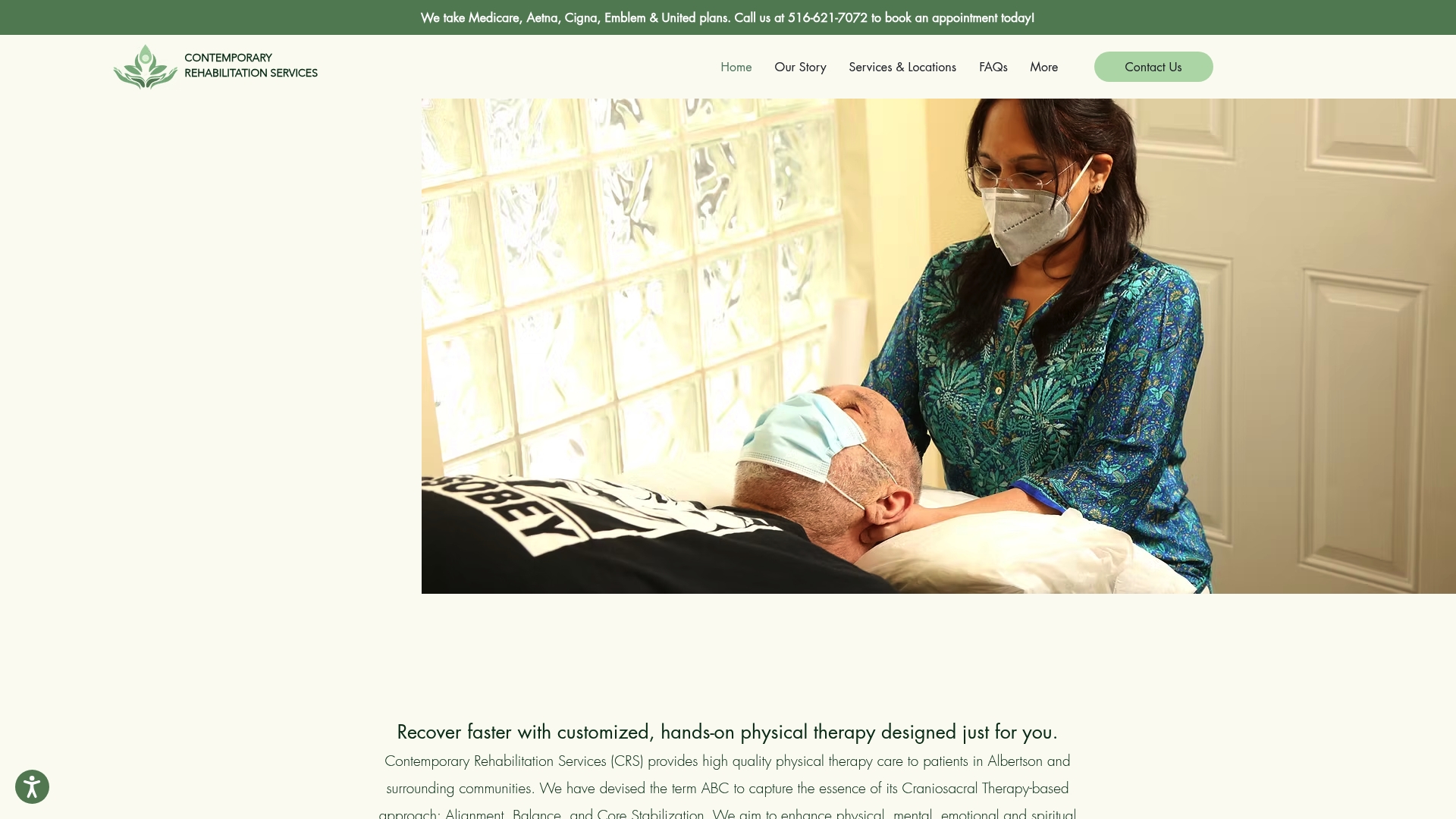
The clinic accepts Medicare, Aetna, Cigna, Emblem, and United Healthcare plans, so insurance coverage is rarely a barrier. Patients can access physical therapy in Herricks, NY or visit the East Williston location for specialized post-injury and post-surgical care. The team also supports home setup guidance and can connect you with DME resources, including recovery support aids to assist with daily safety and mobility during your recovery.
FAQ
What is a rehabilitation checklist?
A rehabilitation checklist is a structured guide covering every step of recovery from injury or surgery, including discharge preparation, home setup, medication management, follow-up care, and functional assessment tracking.
When should discharge planning begin?
Discharge planning should begin three to five days before leaving a rehabilitation facility. This window allows time to confirm equipment delivery, schedule follow-up appointments, and complete home safety modifications.
What assessment tools do therapists use to track progress?
Therapists use the IRF-PAI, Functional Independence Measure (FIM), and Barthel Index to measure functional progress. These tools are required by CMS for inpatient rehab patients and guide therapy adjustments throughout recovery.
How do I choose the right rehab program?
Filter programs by four criteria: level of care, insurance and geography fit, clinical specialization, and aftercare quality. Reputable centers hold CARF or Joint Commission accreditation and maintain a 1:6 staff-to-patient ratio.
Why does aftercare matter more than inpatient treatment length?
Aftercare programs, such as eight-week intensive outpatient programs plus year-long step-down support, produce better long-term outcomes than extended inpatient stays without structured follow-up. Sustained support after discharge is the strongest predictor of recovery success.
Recommended
Comments